
Why roofing vocabulary matters
Roofing terms are more than industry shorthand. Knowing the basic language helps homeowners describe a problem accurately, understand inspection notes, compare repair information, and recognize when a condition may affect safety or water intrusion.
For households in Clarence Center, NY, roof terminology is especially useful because roofs must handle snow, ice, wind, heavy rain, and repeated freeze-thaw cycles. Those conditions can affect shingles, flashing, gutters, attic ventilation, and the roof structure itself.
What are the main parts of a roof?
A roof is a system of connected components rather than a single surface. The most common terms include:
- Decking: The structural surface attached to the roof framing. It is often made from plywood or oriented strand board and provides the base for underlayment and shingles.
- Rafters and trusses: Structural framing members that support the decking. Rafters are individual sloped members, while trusses are engineered assemblies.
- Roof slope or pitch: The steepness of the roof. A roof described as “6-in-12” rises 6 inches for every 12 inches of horizontal distance.
- Ridge: The highest horizontal line where two sloping roof sections meet.
- Hip: An outside angle where two roof slopes meet.
- Valley: An inside angle where two roof sections meet. Valleys collect and direct a large amount of runoff, so they require careful inspection.
- Eave: The lower edge of a sloped roof that extends beyond an exterior wall.
- Rake: The sloped edge of a roof running from the eave toward the ridge.
- Soffit: The underside of an eave or roof overhang.
- Fascia: The vertical trim board along the roof edge, often behind or beside the gutter.
A homeowner may hear that a problem involves the “roof edge” when the actual concern is damaged fascia, soffit, decking, or flashing rather than the shingles themselves.
What is the difference between shingles, underlayment, and decking?
Shingles form the outer weather-resistant layer, but they are only one part of the roof covering. Underlayment and decking serve different purposes beneath them.
Shingles are overlapping pieces made from materials such as asphalt, wood, slate, or metal. Asphalt shingles are common on residential roofs and are designed to shed water through their overlapping arrangement.
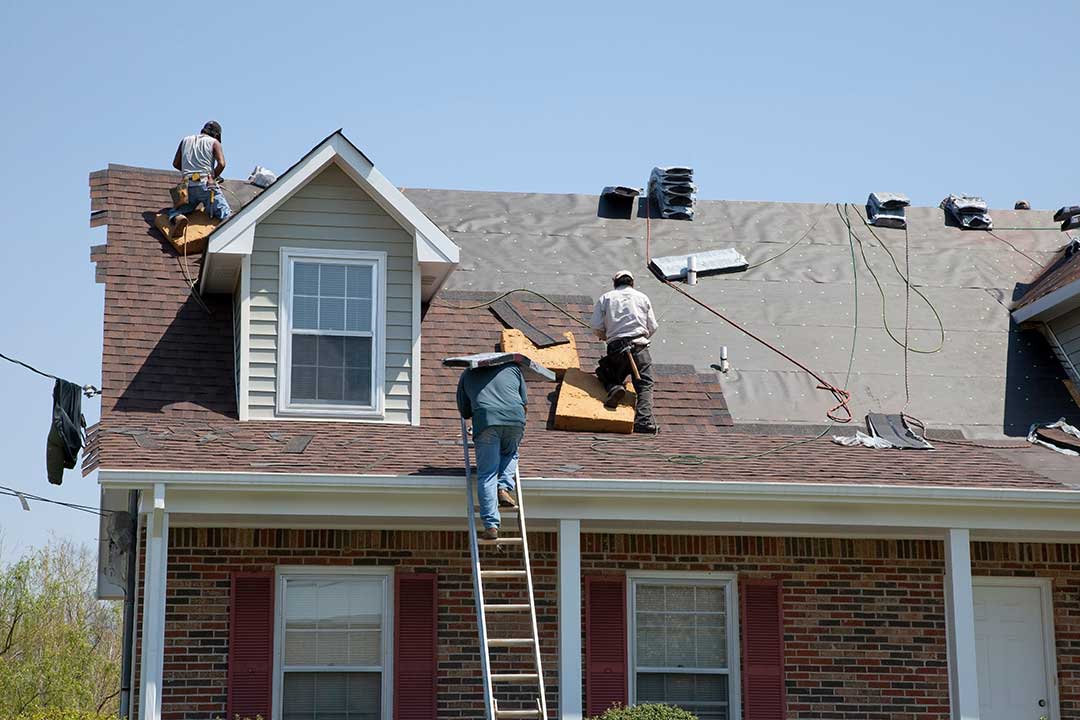
Underlayment is a protective layer installed over the decking and beneath the shingles. It provides an additional barrier against moisture and can help protect the roof while the final covering is being installed.
Decking is the structural layer below the underlayment. If decking is soft, swollen, delaminated, or visibly deteriorated, installing new shingles alone may not address the underlying problem.
A common misconception is that a roof leak always means the shingle directly above the interior stain has failed. Water can travel along the underside of the decking before appearing inside, so the visible stain and the entry point may be several feet apart.
What do flashing and drip edge mean?
Flashing consists of thin, water-resistant material installed where roof surfaces meet other structures or where water could collect. Typical flashing locations include:
- Chimneys
- Plumbing vent pipes
- Skylights
- Wall intersections
- Roof valleys
- Dormers
- Roof-to-porch transitions
Flashing directs water away from vulnerable joints. It may be made from metal, membrane materials, or other approved products.
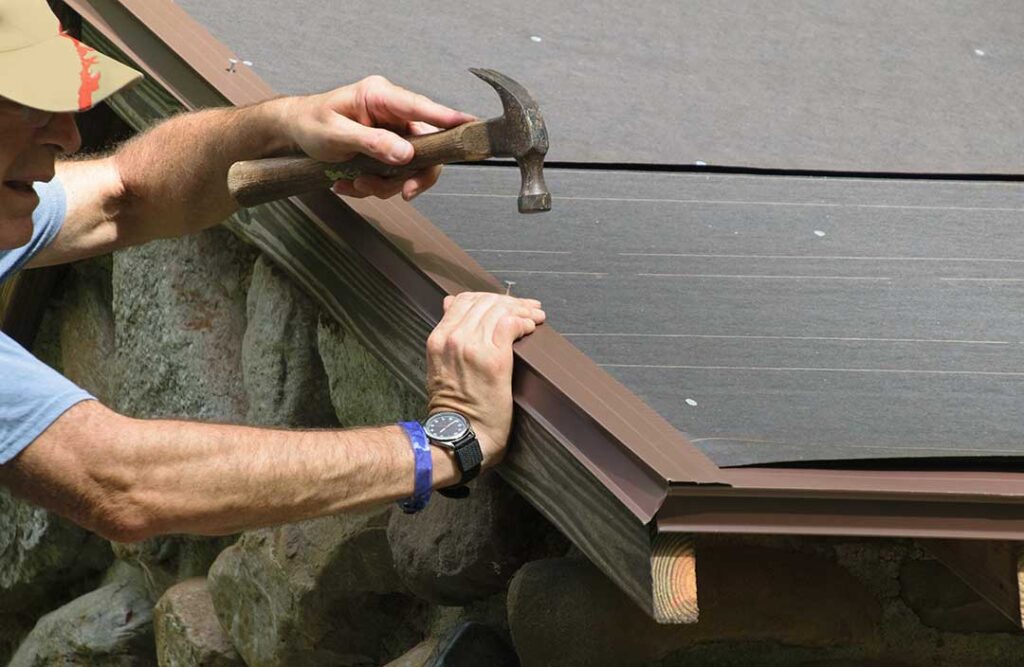
Drip edge is an L-shaped edge component installed along the eaves and often the rakes. It helps move water away from the roof edge and protects the decking, fascia, and underlying trim. Without properly functioning edge protection, runoff can contribute to staining, rot, or moisture damage.
In snowy climates, flashing and edge components also face stress from ice movement, snow sliding, and repeated expansion and contraction.
What is an ice dam?
An ice dam is a ridge of ice that forms along a roof edge and prevents melting snow from draining normally. Water can back up beneath shingles and enter the attic or upper walls.
Ice dams are usually related to uneven roof temperatures. Heat escaping from the living space can warm portions of the roof, causing snow to melt. The water then reaches a colder eave, where it refreezes.
Roof ventilation and insulation can influence the risk, but they do not guarantee that ice dams will never form. Roof geometry, weather patterns, snow depth, air leakage, and shaded areas all matter.
Homeowners should not climb onto an icy roof to remove an ice dam. Pulling at ice or using sharp tools can damage shingles and create a fall hazard.
What do roof ventilation terms mean?
Roof ventilation helps manage heat and moisture in the attic. The main components are:
- Soffit vents: Intake openings usually located under the eaves.
- Ridge vents: Exhaust vents installed along the roof ridge.
- Gable vents: Openings in gable-end walls that allow air movement.
- Turbine or static vents: Additional exhaust devices installed through the roof surface.
- Baffles: Channels that help maintain airflow from soffit vents into attic spaces.
Ventilation is not simply a matter of adding more vents. Intake and exhaust openings need to work together, and attic insulation should not block intended airflow. Excess moisture in an attic can contribute to condensation, mold-like growth, rusted fasteners, and deterioration of roof decking.
What are common signs of shingle damage?
Blistering refers to raised areas on a shingle surface. Granule loss occurs when the protective mineral particles wear away or collect in gutters and downspouts. Curling describes edges that turn upward or downward, while cracking refers to splits in the shingle material.
Other terms include:
- Missing shingles: Areas where wind or deterioration has removed shingles entirely.
- Exposed fasteners: Nails or other fasteners visible where they should be covered.
- Buckling: Horizontal ridges or waves in the shingle field.
- Algae staining: Dark streaks or discoloration caused by organic growth and moisture.
- Moss growth: Vegetation that can retain moisture and lift or disturb shingles.
Not every dark streak indicates a leak, and not every missing granule means immediate failure. The location, extent, age of the roof, and condition of surrounding materials all affect the significance.
What do roof warranty and service-life terms mean?
A manufacturer warranty generally covers defects in roofing materials under stated conditions. It may not cover installation problems, storm damage, poor ventilation, building movement, or ordinary aging.
A workmanship warranty relates to installation quality and is separate from the manufacturer’s material coverage. The exact terms vary, so homeowners should read the written documents rather than rely on a general statement about a roof being “under warranty.”
Service life means the period during which a roof may reasonably perform, but it is not a guaranteed expiration date. Weather exposure, ventilation, maintenance, slope, material quality, and installation conditions all affect how long a roof remains functional.
Which roofing terms relate to safety?
A few terms indicate conditions that should not be treated as routine cosmetic defects.
Structural sagging may suggest weakened decking, framing concerns, or long-term moisture damage. Active leakage means water is currently entering or moving through the roof system. Exposed electrical components, unstable chimney materials, and large areas of missing roofing can also present hazards.
Roof surfaces become especially dangerous during snow, ice, rain, or high winds. From ground level, binoculars or a camera with a zoom function can provide useful information without requiring a climb. Interior inspection of attic spaces should also be done carefully because nails, weak decking, insulation, and limited lighting create hazards.
Knowing terms such as ridge, valley, flashing, underlayment, ice dam, and decking gives homeowners a clearer way to document conditions and ask focused questions. It also helps distinguish a surface issue from a concern involving moisture control, ventilation, or the roof’s supporting structure.
