
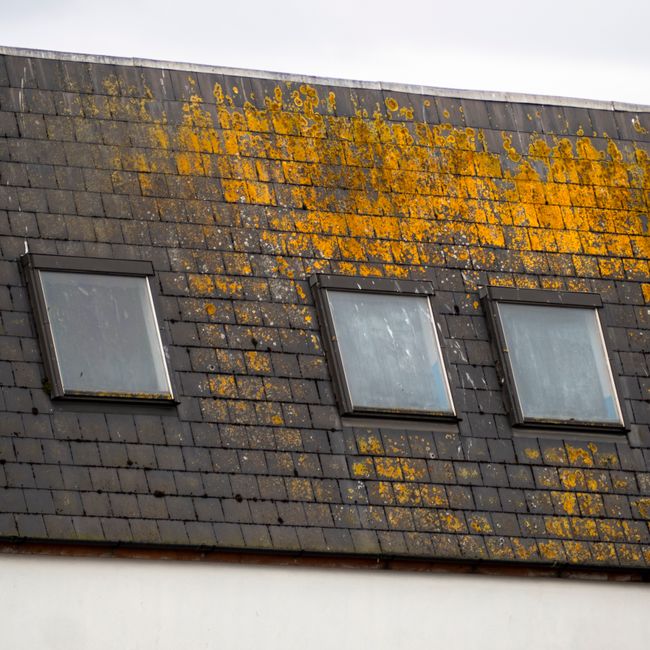
Why do moss and algae grow on roofs?
Moss and algae thrive where roofing materials stay damp, shaded, and slow to dry. In Clarence Center, NY, changing seasons, snow cover, spring rain, summer humidity, and tree shade can create conditions that allow biological growth to persist on roof surfaces.
Moss is a small plant with a fibrous structure that can attach to shingles and hold moisture. Algae are simpler organisms that often appear as dark green, gray, or black streaks. Neither should be confused with ordinary dirt or soot.
Growth is more common on roof areas that receive limited sunlight, especially:
- North-facing slopes
- Sections beneath overhanging trees
- Roof valleys where leaves collect
- Areas near clogged or overflowing gutters
- Low-slope sections with slow drainage
- Portions covered by wet debris or fallen branches
Algae may begin as discoloration, while moss usually forms raised, soft-looking patches. A roof can have one without the other, although they often appear together.
Does moss or algae damage roofing?
Algae mainly affects appearance, but heavy or persistent growth can contribute to roofing problems. Moss presents a greater physical risk because it can grow beneath shingle edges, lift them, and hold water against the roofing surface.
Possible effects include:
- Loosened or lifted shingles
- Increased moisture retention
- Faster deterioration of shingle surfaces
- Water entering beneath damaged areas
- Decay in exposed wood components
- More debris collecting in valleys and drainage paths
Moss does not automatically mean a roof is failing. A small patch may be limited to a shaded area. However, widespread growth, curled shingles, missing granules, soft decking, or recurring dampness deserve closer attention.
Dark streaks are often algae rather than mold. Algae can make a roof look aged without immediately reducing its structural performance. The concern increases when discoloration is accompanied by cracked, brittle, slipping, or missing shingles.
Can moss and algae be removed safely?
Yes, but the method matters. Aggressive cleaning can cause more damage than the growth itself. Asphalt shingles are designed to shed water, not to withstand repeated scraping, pressure washing, or harsh mechanical treatment.
A safer general approach is to remove loose debris first and treat growth gently. Roof surfaces should not be walked on casually, particularly when wet, icy, steep, brittle, or covered with loose granules.
Avoid:
- Pressure washing shingles
- Scraping firmly across the shingle surface
- Pulling moss upward from the lower edge
- Using a stiff wire brush
- Applying undiluted bleach or strong solvents
- Mixing cleaning chemicals
- Working near overhead electrical equipment
- Climbing onto a roof during wet or freezing conditions
Pressure washing can strip protective granules and force water beneath shingles. Scraping can break the surface coating or lift tabs. Chemical mixtures may damage plants, siding, gutters, or painted surfaces if they run off unexpectedly.
Because roof work involves fall hazards, steep slopes, fragile materials, and winter conditions, cleaning from the ground or using a qualified, properly equipped worker is safer than attempting a difficult roof-access job.
What is the gentlest way to reduce roof growth?
For minor growth, prevention and careful surface treatment are usually preferable to forceful removal. Loose leaves, twigs, and organic debris can be cleared from accessible areas without disturbing the shingles. Growth that remains attached should be softened and treated according to the roofing material and product instructions.
Any treatment should be tested cautiously and kept away from landscaping, pets, exterior walls, and metal surfaces. Runoff should be controlled, and gutters should be checked afterward for accumulated debris.
Moss may not disappear immediately after treatment. Dead growth can remain attached for some time and may gradually loosen through weather exposure. Removing it too quickly or too forcefully can damage the roof.
Metal strips installed near the roof ridge are sometimes used to discourage future moss and algae growth. Rainwater carries small amounts of metal across portions of the roof, making the surface less favorable for biological growth. These strips do not repair existing damage, and their effectiveness can be limited when trees, roof shape, or heavy shade prevent water from reaching the affected areas.
How can homeowners prevent moss and algae from returning?
The most effective prevention steps reduce shade, moisture, and debris. Roof maintenance should focus on the conditions that allow growth rather than only treating the visible patches.
Useful measures include:
- Trim branches that heavily shade the roof, while maintaining safe clearance from the roofing surface.
- Keep gutters and downspouts clear so water moves away from the roof and walls.
- Remove leaves and small branches before they remain wet for long periods.
- Check for overflowing gutters, blocked downspouts, and areas where water backs up.
- Keep roof valleys free of accumulated organic debris.
- Improve airflow where nearby vegetation creates a damp, enclosed space.
- Watch for plumbing or ventilation problems that release warm, moist air beneath the roof.
- Replace damaged or missing shingles before moisture reaches the underlying layers.
Tree removal is not always necessary. Selective pruning may provide enough sunlight and airflow to make the roof less hospitable to moss. Any trimming near utility lines or unstable branches presents its own safety concerns.
Does roof age affect moss and algae growth?
Older roofs may show more visible growth because their surfaces have experienced years of weather, granule loss, shade, and repeated wetting. Aging shingles can also be more fragile, making cleaning riskier.
Some newer asphalt shingles contain algae-resistant components, but these do not make a roof permanently immune to discoloration. Resistance may lessen over time, and heavy shade or persistent moisture can still support growth.
Moss and algae are not reliable indicators of remaining roof life by themselves. A roof with staining may still be serviceable, while a clean-looking roof may have hidden damage, poor ventilation, or worn flashing.
Signs that deserve closer evaluation include:
- Shingles that are curling, cracked, brittle, or slipping
- Granules collecting heavily in gutters
- Damp or stained roof decking visible from an attic
- Water marks on ceilings or upper walls
- Moss growing beneath multiple shingle courses
- Sagging roof areas
- Repeated ice-related damage after winter weather
What seasonal conditions matter in Clarence Center?
Cold winters can leave snow and ice on shaded slopes for extended periods, while spring thaw can expose debris, blocked drainage paths, and lifted shingles. Summer humidity and tree cover may keep portions of the roof damp after rain. Autumn leaf fall can add another layer of organic material that traps moisture.
A practical inspection routine is to look over the roofline from the ground in spring and fall. Check whether gutters are overflowing, whether tree branches are resting on the roof, and whether moss has expanded since the previous season. After major wind, ice, or snow events, look for displaced materials and new water stains inside the home.
Addressing moss and algae is less about making every roof look new and more about controlling moisture without harming the roofing system. Gentle maintenance, clear drainage, adequate sunlight, and attention to damaged shingles can help prevent a minor growth problem from becoming a water-management problem.
