
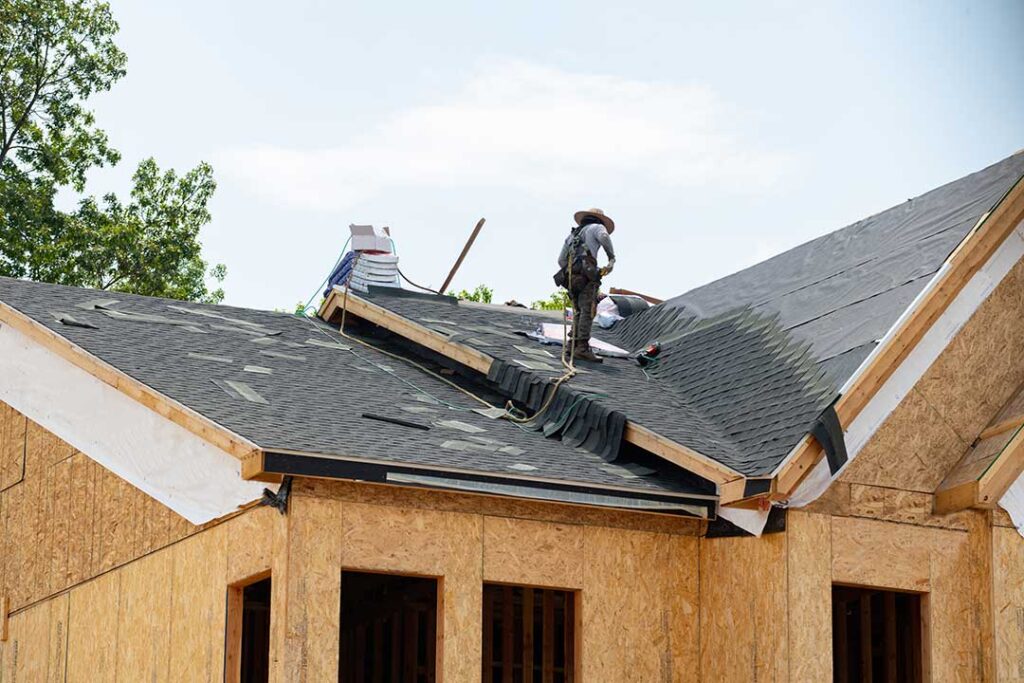
Proper attic insulation affects more than indoor comfort. In Clarence Center, NY, it helps reduce heat loss during cold weather, limits the risk of ice dams, supports roof ventilation, and can help manage moisture that damages wood framing and roofing materials.
How does attic insulation affect a home?
Attic insulation slows the movement of heat between the living space and the attic. During winter, it helps keep heated indoor air from escaping upward. During summer, it reduces the amount of heat transferred from the roof deck into the rooms below.
Without enough insulation, a home may experience:
- Cold ceilings and uneven room temperatures
- Higher heating and cooling demand
- Snow melting unevenly across the roof
- Greater risk of attic condensation
- Drafts around ceiling fixtures, attic hatches, and recessed lights
- Premature deterioration of roof sheathing and framing
Insulation does not create heat or cool air. Its role is to resist heat flow so the mechanical systems do not have to work as hard to maintain a comfortable indoor temperature.
Why is attic insulation especially useful in this area?
Cold, snowy winters create conditions in which attic performance directly affects the roof. If indoor heat escapes through the ceiling, it can warm portions of the roof surface from below. Snow may then melt in those warmer areas and refreeze near colder roof edges, where it can form an ice dam.
Ice dams are not caused by snow alone. They usually result from a combination of:
- Heat escaping into the attic
- Insufficient insulation
- Air leaks from the living space
- Limited or blocked attic ventilation
- Snow and outdoor temperatures that allow repeated melting and freezing
An ice dam can force water beneath roofing materials and into roof edges, soffits, ceilings, and wall cavities. Adequate insulation helps reduce the heat reaching the underside of the roof, although insulation alone cannot correct every ventilation or drainage problem.
What is the difference between insulation and air sealing?
Insulation and air sealing work together, but they solve different problems.
Insulation slows heat movement through a material. Fiberglass, cellulose, and spray foam are examples of insulation materials.
Air sealing blocks unwanted air movement through cracks, gaps, and openings. Common leakage points include:
- The attic hatch
- Plumbing and electrical penetrations
- Gaps around chimneys or flues
- Recessed light fixtures
- Top plates, where walls meet the attic floor
- Duct openings and mechanical equipment penetrations
A thick layer of insulation may perform poorly if warm, moist indoor air can flow around it. Air leakage can carry moisture into the attic, where it may condense on cold surfaces. For this reason, attic improvements often begin with locating and sealing major air leaks before adding insulation.
How much insulation does an attic need?
The correct amount depends on the home’s construction, existing insulation, roof design, and applicable energy requirements. A shallow layer that looks substantial from inside the attic may provide much less protection than a deeper, continuous layer.
The insulation should generally cover the attic floor evenly, without compressed areas, bare patches, or large gaps. Depth markings can help estimate coverage, but depth alone does not tell the whole story because different materials provide different resistance to heat flow.
Homeowners should also check whether insulation has settled, become wet, been disturbed by electrical work, or been pushed aside near the attic perimeter. Areas along exterior walls are often overlooked, yet they can be among the most vulnerable locations for heat loss.
Energy requirements and recommended insulation levels can change over time. For renovation work, local building requirements and safety rules should be reviewed rather than relying only on older construction practices.
Does attic insulation need ventilation?
Insulation and ventilation serve separate purposes. Insulation slows heat transfer, while ventilation helps remove heat and moisture from the attic when the roof assembly is designed for airflow.
A functioning attic ventilation system commonly includes intake ventilation near the lower roof edges and exhaust ventilation near the upper roof area. Airflow can be obstructed when insulation covers intake paths, vents are blocked, or the roof design does not provide a continuous channel.
Ventilation should not be treated as a substitute for insulation. Adding vents without controlling air leakage may allow more outdoor air movement without addressing the heat and moisture entering from the home below. Conversely, adding insulation without preserving intake paths can interfere with the intended ventilation system.
For homes with cathedral ceilings or finished attic spaces, the ventilation approach may differ because insulation is installed along the roofline rather than only across the attic floor.
What problems can moisture cause in an insulated attic?
Moisture is one of the most overlooked attic concerns. It can come from indoor air leaks, roof leaks, bathroom exhaust, clothes dryers, plumbing issues, or inadequate ventilation.
Warning signs include:
- Frost on nails or roof sheathing during cold weather
- Dark staining on wood
- Musty odors
- Damp insulation
- Peeling paint or ceiling stains below the attic
- Mold-like growth on framing or sheathing
- Rust around fasteners or metal components
Wet insulation usually performs less effectively and can remain damp long enough to damage nearby wood. Bathroom and kitchen exhaust should discharge outdoors through properly installed ducts, not into the attic. A roof leak must also be distinguished from condensation because the two problems require different repairs.
Can more insulation solve high energy bills?
Additional insulation may help reduce heat loss, but it is not a complete explanation for every energy problem. Drafty windows, poorly sealed doors, aging heating equipment, leaky ductwork, basement or crawl-space issues, and uncontrolled air leakage can also affect comfort and energy use.
A useful evaluation considers the entire building enclosure. For example, if upstairs rooms remain cold, the cause might be low attic insulation, air leakage around the attic hatch, disconnected ductwork, or inadequate airflow from the heating system.
Insulation should be installed with attention to electrical wiring, heat-producing equipment, ventilation components, and access paths. Covering or enclosing equipment that requires clearance can create a safety hazard.
Is old attic insulation always unsafe?
Old insulation is not automatically dangerous or ineffective. Some older materials remain serviceable if they are dry, clean, and evenly installed. Other materials may be damaged, contaminated, heavily settled, or unsuitable for the current attic design.
Before disturbing older insulation, consider whether it may contain hazardous materials, animal waste, or other contaminants. Special caution is warranted around aging vermiculite insulation, unknown loose-fill materials, and areas with visible droppings or nesting.
Protective clothing and respiratory protection may be appropriate for minor inspection tasks, but contaminated or potentially hazardous conditions can require specialized handling. Safety concerns are a legitimate reason to obtain qualified guidance before removal or major disturbance.
What should homeowners inspect after a winter season?
A simple visual inspection can reveal problems early. From a safe, accessible location, look for uneven insulation coverage, wet areas, blocked soffit paths, frost staining, and daylight around attic penetrations.
After major snow or cold-weather periods, also watch for:
- Repeated ice buildup along roof edges
- Water stains on ceilings or upper walls
- Icicles associated with interior leaks
- Rooms that are much colder than others
- A persistent damp or musty attic smell
Do not walk on fragile ceiling surfaces or climb near unprotected roof edges. Attic inspections may involve exposed nails, limited flooring, electrical hazards, and poor visibility. Where access or safety is uncertain, inspection should be handled by someone equipped to work in that environment.
Proper attic insulation is most effective as part of a balanced roof system: controlled air leakage, sufficient insulation, clear ventilation paths, proper exhaust ducts, and a roof that sheds water reliably. Together, these elements help protect comfort, building materials, and long-term roof performance through the region’s changing seasons.
