
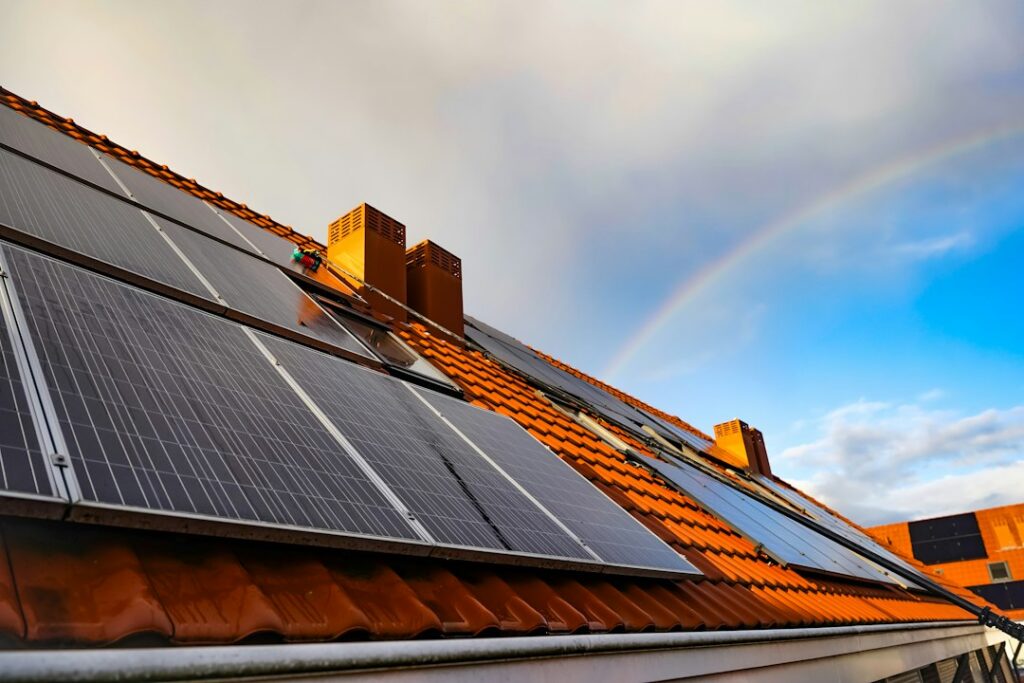
Solar panels can be a practical option for many homes, but the roof should be evaluated before the energy system is designed. In Clarence Center, NY, winter snow, freeze-thaw cycles, wind, roof age, and permit requirements all affect whether a rooftop installation is suitable.
The panels themselves are only one part of the project. The roof covering, framing, flashing, electrical connections, drainage, and future maintenance plan all deserve attention before installation begins.
Is the roof strong enough for solar panels?
Usually, a sound roof can support a properly designed solar array, but the answer depends on the roof’s framing, condition, slope, and the mounting system being used.
Solar panels and their racking add weight to the roof. The system also changes how snow and wind interact with the roof surface. In a region that experiences regular winter storms, the design should account for snow accumulation and uneven loading, particularly near the lower edges of tilted panels where sliding snow may collect.
A roof evaluation should consider:
- The condition of the roof sheathing and rafters
- Existing water damage, soft areas, or sagging
- The roof’s snow and wind load capacity
- The location of trusses, rafters, vents, chimneys, and skylights
- Whether the mounting points can be properly attached to structural members
- The condition of the attic insulation and ventilation
A roof that already shows structural movement, leaks, or deterioration should not be treated as ready simply because it has enough open space for panels.
Should a roof be replaced before solar installation?
If the roof is near the end of its useful life, replacement before installing panels is often the more practical sequence. Solar arrays can last for decades, while asphalt roofing commonly requires replacement sooner.
Installing panels over an aging roof can create a difficult maintenance situation. If roofing work becomes necessary later, the array may need to be disconnected, removed, stored, and reinstalled. That adds labor, scheduling complications, and potential risk to the panels and mounting hardware.
Signs that a roof may need attention first include:
- Shingles that are curling, cracking, brittle, or missing
- Granules collecting in gutters or at downspouts
- Repeated leaks or stained roof decking
- Sagging roof lines
- Extensive moss or moisture damage
- Flashing that is loose, rusted, or deteriorated
- An installation date that is already close to the roof’s expected replacement period
A newer roof is not automatically suitable, but its remaining service life should be long enough to justify placing a long-lived energy system above it.
Which roof areas are best for solar?
Solar panels perform best on roof sections with good exposure to the sun and limited shading. Roof orientation, pitch, nearby trees, chimneys, dormers, and neighboring structures all influence production.
A roof does not need to face one exact direction to work. However, heavily shaded sections may produce less electricity, especially during morning and afternoon periods. Trees that are currently small may also become a future problem as they grow.
In established neighborhoods and on larger residential lots, shading can come from mature trees, detached structures, and roof features. A design should examine both current conditions and likely changes over the life of the system.
The roof layout also matters. A simple roof plane may allow cleaner panel placement and fewer penetrations. Complicated roofs can require more mounting hardware, additional wiring paths, and careful planning around valleys and drainage areas.
How do solar panels affect leaks?
Solar panels do not inherently cause roof leaks, but poor attachment details can. The greatest risk usually comes from improperly installed roof penetrations, damaged flashing, or mounting hardware that is not secured to the structural framing.
A sound installation should preserve the roof’s water-shedding design. Mounting locations should avoid blocking drainage paths, and penetrations should be flashed and sealed using methods compatible with the roofing material.
Homeowners should also understand where responsibility lies if a leak appears later. Written records should identify the roof areas affected by the array, the mounting method, the location of penetrations, and the process for handling repairs. Keeping photographs of the roof before installation can also be useful for future maintenance and insurance documentation.
Panels should not be treated as a substitute for roof maintenance. Gutters, flashing, roof edges, and exposed roofing areas still need periodic inspection.
What happens during winter?

Snow does not automatically make rooftop solar impractical. Panels are installed at an angle, and some snow may slide or melt as sunlight reaches the surface. However, heavy or uneven snow can temporarily reduce production and place added stress on the array and roof.
Snow sliding from panels can also create a safety concern near entrances, walkways, vehicles, and lower roof sections. Roof geometry should be reviewed so that falling or sliding snow does not create an avoidable hazard.
Do not climb onto a roof to clear snow from panels. Scraping can damage the panel surface, mounting system, or roofing. Snow removal should only be considered when it can be done safely and without placing people beneath a sliding load.
Winter performance may also be affected by shorter daylight hours, cloud cover, ice, and snow-covered sections. A system can continue producing electricity during cold weather, but annual output estimates should account for seasonal conditions rather than relying only on summer performance.
Are permits required for rooftop solar?
Rooftop solar work generally involves building, electrical, structural, and fire-safety considerations. In Clarence Center, construction and alteration projects must comply with the applicable town requirements and the New York State Uniform Fire Prevention and Building Code. Work should not begin before required permits are issued.
Permit review helps confirm that plans address structural attachment, roof loading, electrical equipment, setbacks, access pathways, and emergency considerations. Requirements can vary depending on the type of roof, system size, battery storage, and whether the installation is new construction or an addition to an existing home.
Permit fees, application materials, inspections, and code requirements can change. The current requirements should be confirmed before materials are ordered or work is scheduled.
Can solar panels affect property taxes or insurance?
New York provides a potential property-tax exemption for the added assessed value associated with qualifying solar energy systems, generally for up to 15 years. The exemption may involve an application, and local administration matters. Homeowners should not assume that the benefit is automatic.
Solar equipment can also affect homeowners insurance. The array, inverter, wiring, and related equipment may need to be disclosed to the insurer. Coverage can depend on whether the equipment is considered part of the dwelling, an attached structure, or separate property.
Insurance questions are especially relevant after hail, wind, falling branches, or snow-related damage. Policyholders should understand deductibles, equipment coverage, roof-age restrictions, and whether temporary removal of panels during roof repairs is covered.
What should homeowners check before deciding?
A practical review should begin with the roof rather than the panel count. Useful questions include:
- How many years of service likely remain in the roof covering?
- Has the attic or roof framing shown signs of moisture or movement?
- Which roof sections receive reliable sunlight?
- Where will wiring, inverters, and shutoffs be located?
- How will snow shedding affect doors, walkways, and lower roofs?
- What permits and inspections apply?
- How will future roof repairs be handled?
- Are tax treatment and insurance coverage documented clearly?
For many households, the best timing is when roof replacement and solar planning can be coordinated. For others, a structurally sound roof with substantial remaining life may not need replacement. The right decision depends on the roof’s condition, the home’s layout, expected energy use, and the long-term maintenance plan.
